Cut Through the Confusion, Refresh Your Knowledge, and Sharpen Your Confidence in a Code
Synopsis
Even seasoned nurses and students still hear outdated myths about AEDs. This article clears up the 10 most common misconceptions so you can act quickly, confidently, and without hesitation in a real emergency.
Introduction
If you’ve been in healthcare long enough, you’ve probably stood in a room where the AED made all the difference—and maybe a few where it didn’t get there fast enough. And while most nurses are comfortable being around AEDs, many still tell me during BLS and ACLS renewals that they have lingering hesitations about using them—especially when seconds matter.
That hesitation doesn’t come from ignorance. It comes from overthinking, outdated information, inexperience, or second-guessing yourself in a high-stakes moment.
So whether you’ve used an AED once, a dozen times, or just handled them during mock codes and training, this article is a quick tune-up. We’re going to break down the 10 most common AED myths that even seasoned pros still hear—or accidentally pass along.
Let’s sharpen your readiness, tighten your mental checklist, and make sure nothing slows you down when it's time to act.
Myth # 1. “You can shock someone who doesn’t need it.”
Truth: AEDs don’t let you deliver a shock unless the patient’s rhythm is truly shockable.
This is still one of the most common concerns—even among trained staff. But AEDs are built to analyze cardiac rhythms with precision, and they only advise a shock when they detect ventricular fibrillation or pulseless ventricular tachycardia.
There’s no manual mode or guesswork involved. If the patient has a pulse, is in asystole, or has PEA, the machine won’t shock—even if someone hits the button. AEDs will only charge when it detects a shockable rhythm.
So when someone’s down, don’t waste time wondering whether the AED might “hurt” them. Let the machine tell you what to do, follow the prompts, and focus your energy on delivering high-quality CPR and leading the team.
Myth # 2. “You need to be a doctor or paramedic to use one.”
Truth: If you're a nurse or a health professional trained in BLS, you're exactly the person who should be using it.
This myth lingers in some clinical settings, especially where there’s a traditional hierarchy. But BLS-certified nurses are trained and expected to use AEDs. In fact, most public AEDs are designed to be used by anyone—not just clinicians.
As a nurse, you already possess the knowledge and experience to effectively handle patients, assess situations, communicate with the team, and take appropriate action. Waiting for a doctor or advanced provider to "arrive and lead" can cost valuable seconds.
When a patient crashes, you don’t need permission to act. You are the person in the room who can take control.
Myth # 3. “You can hurt someone if you use it wrong.”
Truth: AEDs are designed to minimize error and maximize safety.
This is a very real fear for many nurses, especially in high-stress situations: “What if I mess it up?” But modern AEDs are step-by-step voice-guided, with clear prompts and safeguards.
The AED tells you to place the pads. The pads have pictures, to guide you to correct placement. It will analyze the rhythm before doing anything else. It alerts you when to stand clear and when to push the shock button and to resume CPR.
The AED incorporated in the hospital defibrillator can be switched to manual mode. This is where the team can evaluate the patient's ECG, and decide on treatments and the manual use of the defibrillator.
Trust your training. And remember—the worst thing you can do is nothing.
Myth # 4. “You can’t use an AED on someone with a pacemaker.”
Truth: You can—you just need to be thoughtful with pad placement.
If a patient has a visible or palpable implanted defibrillator or pacemaker, you don’t need to hesitate. Just avoid placing the AED pad directly over the implanted device.
Instead, place the pad slightly lower (2-3 inches) or to the side to ensure full contact with the chest wall. The AED will still read the rhythm and deliver therapy if appropriate.
In addition, if there is any medication patches close to pad placement spot, the patch can be removed.
And in an emergency, don’t waste time overthinking it. A slightly imperfect pad placement is still better than no defibrillation at all.
Myth # 5. “AEDs aren’t safe for children.”
Truth: AEDs can absolutely be used on pediatric patients—with or without pediatric pads.
For children under 8 years old (or under 55 pounds), pediatric pads are ideal—they reduce the energy delivered and are designed for smaller anatomy. But if you only have adult pads, use them anyway. Just adjust your placement—typically one pad on the chest, the other on the back.
The key is not to delay. A child in cardiac arrest needs immediate defibrillation just as urgently as an adult.
Myth # 6. “You can’t use an AED in wet conditions.”
Truth: You can—just dry the chest as much as possible and proceed.
AEDs are commonly used in wet environments—pools, bleachers, bathrooms, rainy sidewalks. The real concern isn’t water everywhere—it’s water between the pads and the skin, which can prevent proper conduction.
So, if the patient is wet or sweaty, just grab a towel, gauze, or shirt and dry the chest quickly. If they’re lying in a puddle, move them if possible, but don’t spend precious time trying to create perfect conditions.
AEDs are considered safe when used correctly and are not affected by water.
Myth # 7. “You should wait for the crash cart or EMS to arrive.”
Truth: Every minute without defibrillation lowers survival odds.
The AED is made for anyone to be able turn on, apply the pads, and use when there is no palpable pulse. Starting CPR and applying the AED pads to analyze gives the victim the best chance of survival.
Here’s the reality: survival drops by 7–10% for every minute defibrillation is delayed. If you’re trained, and the AED is nearby, you can save a life in minutes.
Have someone call 911 or the emergency team. EMS and the full code team will take over when they arrive, but the chain of survival starts with you.
Myth # 8. “If the person has a pulse, the AED might still shock them.”
Truth: AEDs shock rhythms, not pulses—and it won’t shock if it’s not needed.
AEDs don’t assess for a pulse. They assess electrical rhythms. If there’s organized electrical activity that doesn’t meet the criteria for defibrillation, the AED will not advise a shock.
The only time that AEDs and pads are needed is when the victim is pulseless. It is not necessary to use when someone is dizzy or has passed out. They have a pulse, but need a cardiac monitor and may need emergency treatment.
Myth # 9. “AEDs are for heart attacks.”
Truth: AEDs treat cardiac arrest—not heart attacks.
This confusion is common, and understandable. A heart attack (MI-myocardial infarction) is a cardiac vessel issue, possibly a blocked artery. Cardiac arrest is an electrical problem—the heart suddenly stops pumping effectively.
AEDs do not “fix” a heart attack. They shock chaotic electrical rhythms in sudden cardiac arrest (like V-fib or pulseless V-tach).
A heart attack can lead to cardiac arrest—but when that happens, the AED isn’t treating the blockage. It’s treating the resulting dysrhythmia. The victim will need to be treated in a coronary reperfusion capable medical site.
Myth # 10. “If it says ‘No Shock Advised,’ the patient must be okay.”
Truth: No shock advised doesn’t mean “all clear.” It means “start compressions now.”
When the AED says “No shock advised,” that often confuses the user. They assume the patient doesn’t need intervention. But here’s the reality: they might be in asystole or PEA, which are not shockable—but are still life-threatening.
That’s why the AED follows up with “Begin CPR.”
Also, if the victim has a pulse it will say “no shock advised”. This is why we only use the AED on pulseless victims. So, if no shock is advised- “START CPR”.
Final Thoughts
Most nurses know how AEDs work—but even the most experienced clinicians can carry around outdated beliefs or mental scripts from years ago. And in the middle of a real code or emergency, those split-second doubts can make or break your response.
That’s why this article isn’t about “teaching” you how an AED works—it’s about demystifying the role and use of the AED and that you never hesitate when it matters most.
Because when you know the truth—and trust it—you’ll move faster, lead better, and save more lives.
Quick AED Reminders for Nurses
- Use only when the patient is unresponsive and pulseless
- Dry the chest and place pads firmly on bare skin
- Don’t delay for EMS or the crash cart—start the process
- Pediatric pads preferred for kids <8 years—but use adult pads if needed
- Avoid placing pads over pacemakers or medication patches
- If AED says “No shock advised,” start CPR immediately
"The AED is your ally, not your enemy. Know it. Trust it. Use it." —Michele G. Kunz
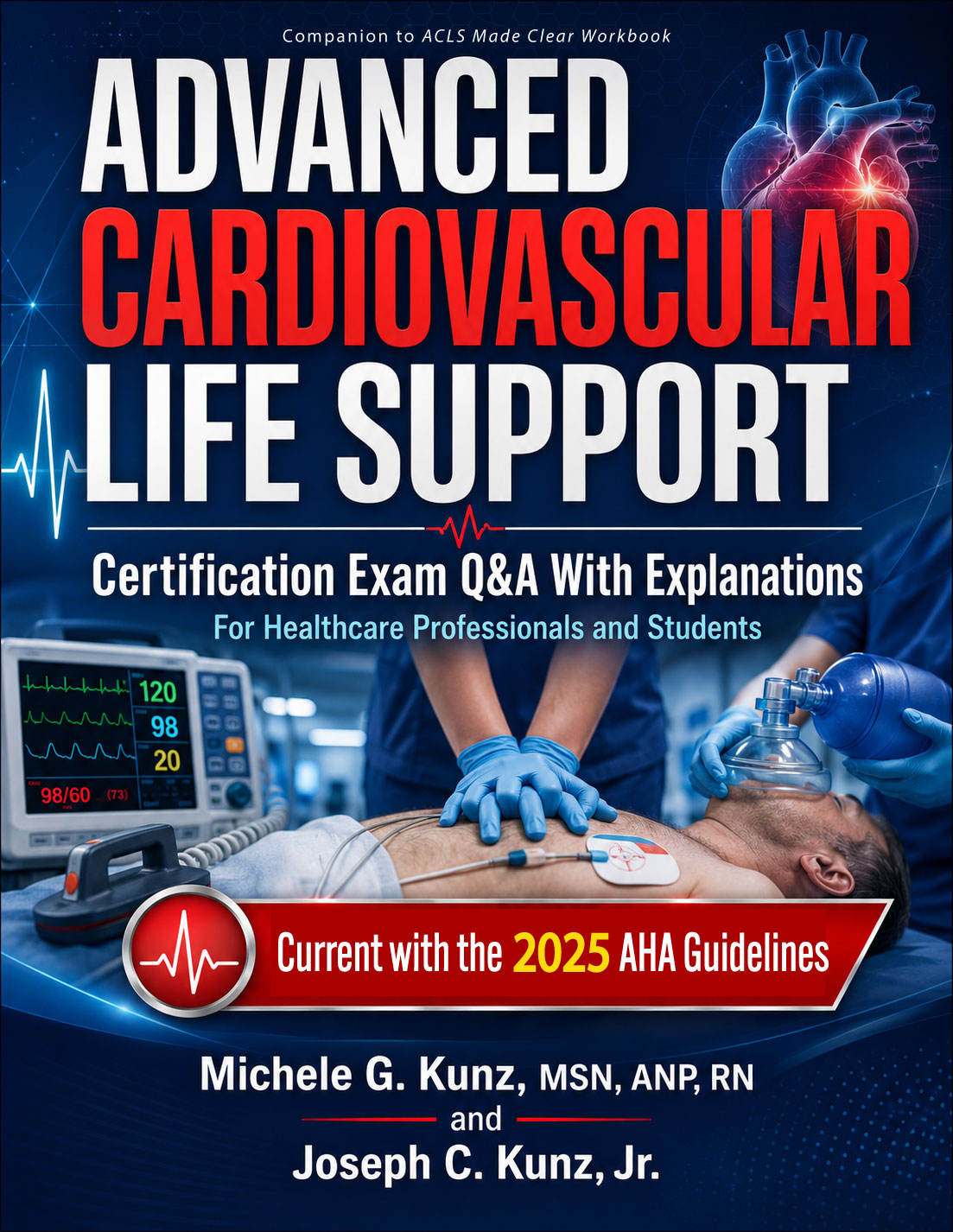
Master Your ACLS Certification with Expertise and Confidence!
Unlock the secrets to ACLS certification with this essential guide, tailor-made for healthcare professionals and students. Whether you’re aiming for certification or recertification, this book is your key to success, packed with 101 detailed questions and explanations that span the entirety of the ACLS exam spectrum.
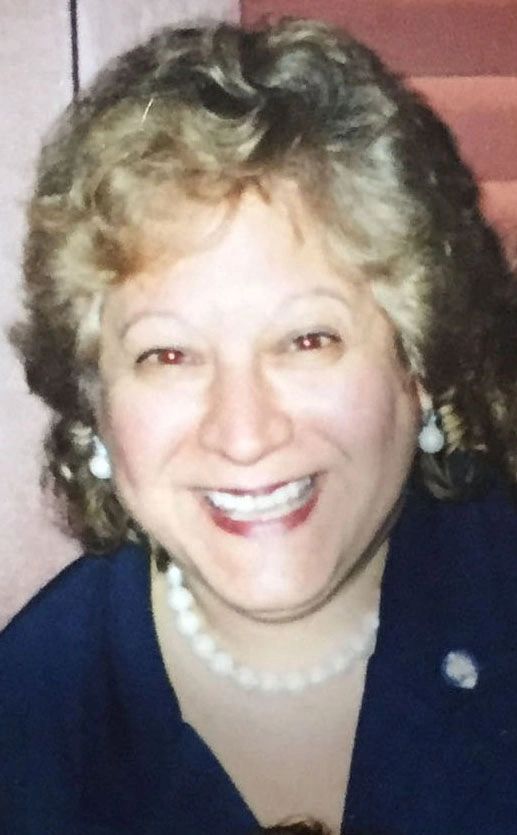
With over 46 years of experience as a nurse and nursing educator, Michele Kunz is a dedicated advocate for compassionate and effective patient care. As a seasoned professional, Michele has trained and certified thousands of nurses and healthcare providers, sharing her extensive knowledge and passion for nursing. Her articles aim to inspire, educate, and support nurses in their journey, promoting excellence in the nursing profession.
