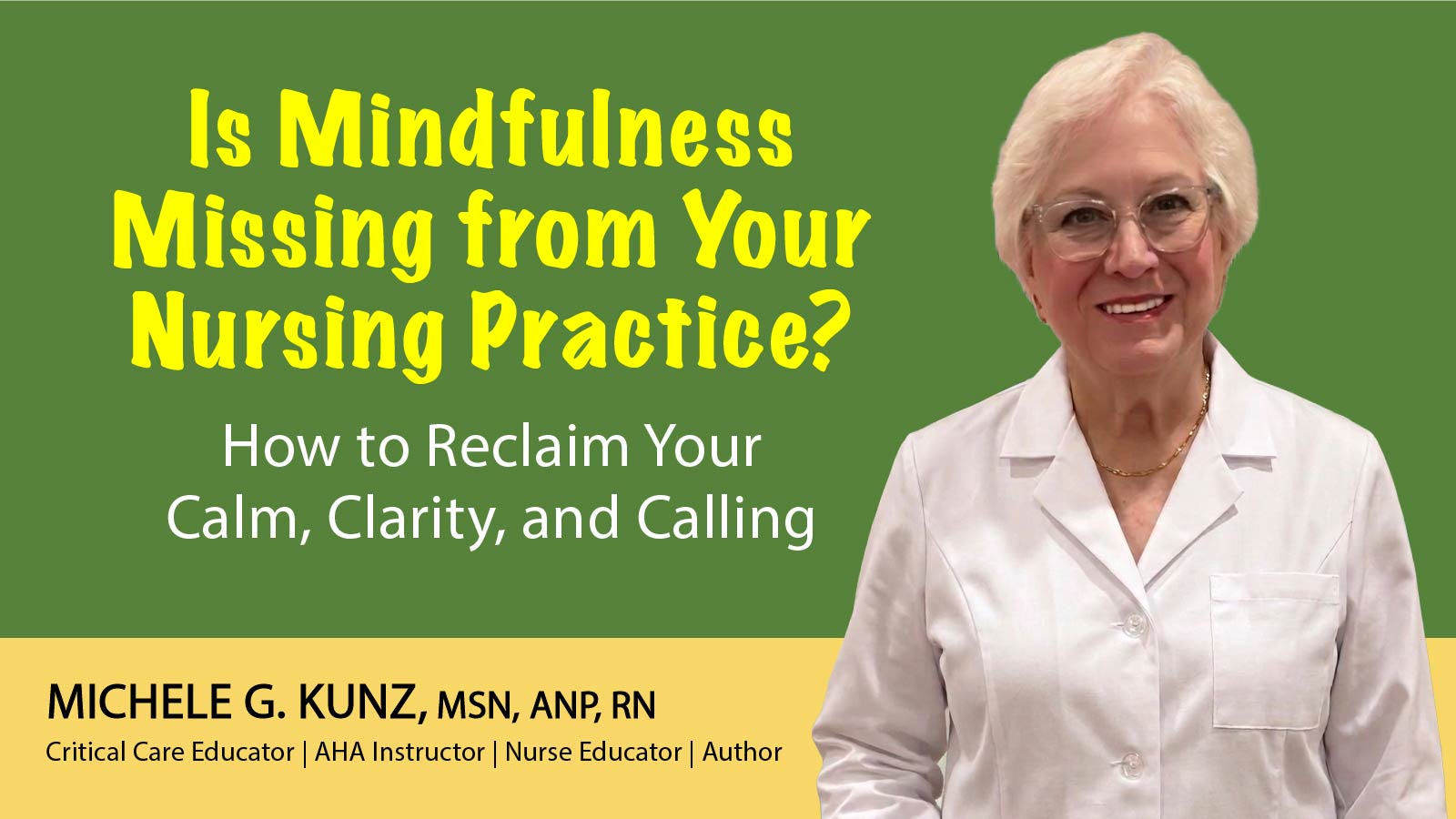
How to Reclaim Your Calm, Clarity, and Calling
Synopsis
This article explores the often-overlooked role of mindfulness in nursing and asks a critical question every nurse should consider: Is mindfulness missing from your practice? It highlights the signs that a lack of mindful awareness may be leading to burnout, emotional exhaustion, or disconnection from purpose. Readers are introduced to simple, actionable strategies to bring mindfulness into their daily routines, and are encouraged to take a short self-check quiz and explore The Art of Mindful Nursing Primer for deeper guidance and professional renewal.
Introduction
Nursing is a profession built on compassion, skill, resilience, and the ability to show up—fully and completely—for others. But in the middle of back-to-back shifts, alarm fatigue, administrative overload, and emotional exhaustion, it’s easy to lose touch with one vital presence in the equation: yourself.
That’s where mindfulness comes in. It’s not a luxury or a soft skill—it’s a practical, necessary tool for staying grounded, present, and purposeful in the face of daily demands. Without it, even the most dedicated nurse can begin to feel disconnected, reactive, or burned out.
So, ask yourself:
A. Is mindfulness missing from your nursing practice?
If you’re not sure, you’re not alone. Many nurses haven’t been taught how to integrate mindfulness into their daily routine. Others dismiss it as a “nice idea” that doesn’t fit into the fast-paced, high-stress reality of modern healthcare. But the truth is, the absence of mindfulness is often the root of the stress, frustration, and burnout we see in nursing today.
B. Why Mindfulness Matters—Especially for Nurses
Mindfulness is not about zoning out, emptying your mind, or sitting cross-legged for an hour. It’s about becoming aware—of yourself, your patients, your reactions, your environment—and choosing to respond with intention instead of impulse.
In clinical practice, this might mean:
- Listening fully to a patient without letting your thoughts race ahead
- Noticing when your shoulders are tense or your breath is shallow
- Centering yourself before a difficult conversation
- Recognizing burnout signs before they overwhelm you
- Responding with grace instead of reacting with frustration
Mindfulness helps you create a moment of pause—a space to breathe, reflect, and reset. In that pause lies your power.
C. The Signs Mindfulness Might Be Missing
Take a moment to reflect on these common signs:
- You finish your shift and can’t remember half of it
- You go home mentally and emotionally drained—every day
- You feel like you’re just “getting through the day”
- You’ve lost your sense of purpose or joy in nursing
- You’re more reactive and less patient—with others and yourself
- You feel like you’re running on autopilot
If any of these sound familiar, you may be running low on mindful awareness—and your well-being, your performance, and your patients may be paying the price.
That’s exactly why we created the Quick Self-Check Quiz. It’s a fast and easy way to reflect on where mindfulness currently fits into your nursing routine—and where it may be missing.
There’s no judgment, just gentle awareness and insight.
D. From Awareness to Action: What You Can Do Today
Mindfulness doesn’t require hours of free time or a complete lifestyle overhaul. It starts with small steps—intentional breaths, brief pauses, tiny rituals—that slowly but surely bring you back to center. Here are a few ways to begin:
- Start your shift with a grounding breath before entering a patient’s room.
- Notice your thoughts during routine tasks. Are they helpful, stressful, or just noise?
- Reflect for 60 seconds after a difficult interaction instead of just pushing through.
- Take a moment to recognize a win—even a small one—before you clock out.
These small changes can lead to big breakthroughs in how you experience your day, connect with your patients, and care for yourself.
E. The Next Step: A Practical Guide for Nurses
If you’re ready to explore this deeper, we invite you to read The Art of Mindful Nursing Primer—a simple, accessible book that introduces mindfulness through the lens of real nursing experiences. It’s not fluff. It’s not theory. It’s practical wisdom for nurses who want more meaning and less burnout.
Inside, you’ll discover:
- What mindful nursing really means
- How to create mindful moments in a busy clinical day
- Why emotional awareness is a superpower in healthcare
- How mindfulness builds resilience, compassion, and leadership
Whether you're a brand-new nurse or decades into your career, mindfulness can help you reconnect with your purpose and protect the passion that brought you into this field in the first place.
Final Thoughts
You can’t pour from an empty cup—and mindfulness is how you refill it.
So ask yourself again:
Is mindfulness missing from your nursing practice?
If the answer is yes, don’t feel guilty. Feel grateful—because now, you have the awareness to do something about it.
And I am here to help you take that first step.
“Mindfulness isn’t a luxury for nurses—it’s a necessity.” —Michele G. Kunz
Ready to Bring Mindfulness into Your Nursing Practice?
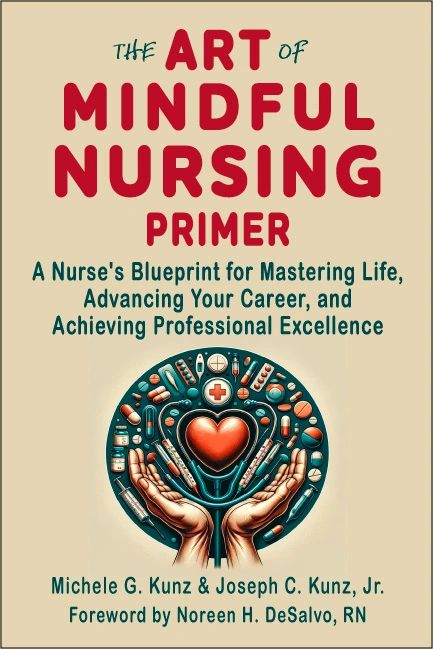
If you want to deepen your understanding of mindfulness and discover practical ways to incorporate it into your daily routine, The Art of Mindful Nursing Primer is the perfect resource.
This book offers insightful strategies, real-world applications, and easy-to-follow techniques designed specifically for nurses. Empower yourself, reduce stress, and enhance the care you provide—one mindful moment at a time.

With over 46 years of experience as a nurse and nursing educator, Michele Kunz is a dedicated advocate for compassionate and effective patient care. As a seasoned professional, Michele has trained and certified thousands of nurses and healthcare providers, sharing her extensive knowledge and passion for nursing. Her articles aim to inspire, educate, and support nurses in their journey, promoting excellence in the nursing profession.
