A practical look at the PROCAMIO study, stable wide-complex tachycardia, and why “old” does not always mean obsolete.
Synopsis
Many experienced practitioners may be surprised to see procainamide listed in the AHA tachycardia algorithm. It may feel like an old drug from another era, but procainamide still has a narrow, important role in selected patients with stable wide-complex tachycardia who still have a pulse.
The key is knowing where it belongs.
“In emergency care, old does not automatically mean outdated. The right treatment depends on the patient, the rhythm, and the situation in front of you.” —Michele G. Kunz
I. Introduction: Procainamide? Really?
Many experienced practitioners may do a double take when they see procainamide listed in the AHA tachycardia algorithm.
Procainamide?
Really?
For some practitioners, this drug feels like something from another era. Many of us have not seen it used in years. Some may not remember seeing it in a code cart. Others may remember it from decades ago but rarely, if ever, see it used in practice today.
So why is procainamide still listed?
The answer is simple: procainamide is not a routine cardiac arrest drug. It has a narrow but important role in selected patients with stable wide-complex tachycardia who still have a pulse.
That difference matters.
This is not the same as treating a pulseless cardiac arrest. In cardiac arrest, the priorities are CPR, defibrillation when indicated, epinephrine, airway management, and the cardiac arrest algorithm. Procainamide belongs in a different situation: a patient with a pulse, a stable condition, and a regular wide-complex rhythm that can be carefully monitored. The current AHA adult tachycardia algorithm lists procainamide as one of the antiarrhythmic infusion options for stable wide-QRS tachycardia.
II. What the PROCAMIO Study Showed
One reason procainamide continues to get attention is the PROCAMIO study.
PROCAMIO compared IV procainamide with IV amiodarone in patients with hemodynamically stable regular wide-QRS tachycardia, presumed in many cases to be ventricular tachycardia. These were not pulseless patients. These were not crashing cardiac arrest patients. These were patients with a fast wide-complex rhythm who were stable enough to receive medication and be monitored.
The study compared:
Procainamide: 10 mg/kg over 20 minutes
Amiodarone: 5 mg/kg over 20 minutes
The results surprised many clinicians.
Patients who received procainamide had fewer major cardiac adverse events within 40 minutes than those who received amiodarone: 9% vs. 41%. Procainamide also terminated the tachycardia more often: 67% vs. 38%.
That does not mean procainamide is better for every patient. It does not mean every wide-complex rhythm should be treated with procainamide. And it definitely does not mean practitioners should ignore local protocols, provider direction, cardiology consultation, or patient-specific contraindications.
But it does help explain why this “old” drug still matters.
III. Old Does Not Always Mean Obsolete
In healthcare, we sometimes assume that newer means better and older means outdated.
That is not always true.
Some older medications disappear because they are no longer useful, no longer safe, or replaced by better options. But some older medications remain because, in the right situation, they still work.
Procainamide is one of those drugs.
For the average practitioner, the most important point is not to memorize every detail of the study. The important point is to understand the clinical situation where procainamide may be considered:
The patient has a pulse.
The rhythm is wide-complex.
The rhythm is regular.
The patient is stable.
The medication is given as an infusion with close monitoring.
The AHA tachycardia algorithm lists the procainamide dose as 20–50 mg/min until the arrhythmia is suppressed, hypotension occurs, the QRS widens by more than 50%, or the maximum dose of 17 mg/kg is reached. The algorithm also says to avoid procainamide in patients with prolonged QT or congestive heart failure.
So procainamide is not there by accident.
But it is also not a casual medication.
IV. What Practitioners Should Remember
Procainamide is not something practitioners should think of as a routine code-cart drug.
It is not something to give quickly without careful monitoring.
It is not for every tachycardia.
It is not a substitute for synchronized cardioversion when the patient is unstable.
But procainamide still has a place in modern ACLS because selected patients with stable wide-complex tachycardia may benefit from it.
For practitioners, the practical responsibility is to recognize the rhythm problem, assess the patient’s stability, monitor closely, prepare for possible cardioversion, follow facility policy, and understand why the medication appears in the algorithm.
V. Conclusion: The Bottom Line
Procainamide may feel like an old drug, but old does not always mean obsolete.
The PROCAMIO study helped show that, in selected stable patients with regular wide-complex tachycardia, procainamide may be more effective and better tolerated than amiodarone. That is why it still deserves attention.
The key is knowing where it belongs.
Procainamide is not “back” as a routine cardiac arrest drug. It remains relevant because it has a specific role in stable wide-complex tachycardia with a pulse.
“A good practitioner does not just memorize the algorithm. A good practitioner learns to understand the patient, the rhythm, and the reason behind the treatment.” —Michele G. Kunz
Want to Build More Confidence in Your Nursing Practice?
Nursing is more than memorizing algorithms, medications, and protocols. It also requires calm judgment, clear thinking, emotional strength, and the ability to stay present when the pressure rises.
That is why I wrote The Art of Mindful Nursing Primer.
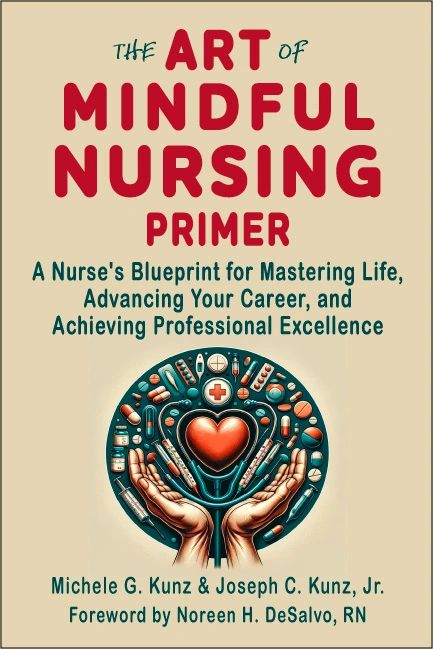
This short, practical book helps practitioners reconnect with the deeper purpose of nursing while developing the mindset needed to handle stress, uncertainty, difficult patients, demanding shifts, and the emotional weight of the profession.
If you want to become a more focused, grounded, and resilient practitioner, this primer is a good place to begin.
With over 46 years of experience as a nurse and nursing educator, Michele Kunz is a dedicated advocate for compassionate and effective patient care. As a seasoned professional, Michele has trained and certified thousands of nurses and healthcare providers, sharing her extensive knowledge and passion for nursing. Her articles aim to inspire, educate, and support nurses in their journey, promoting excellence in the nursing profession.
