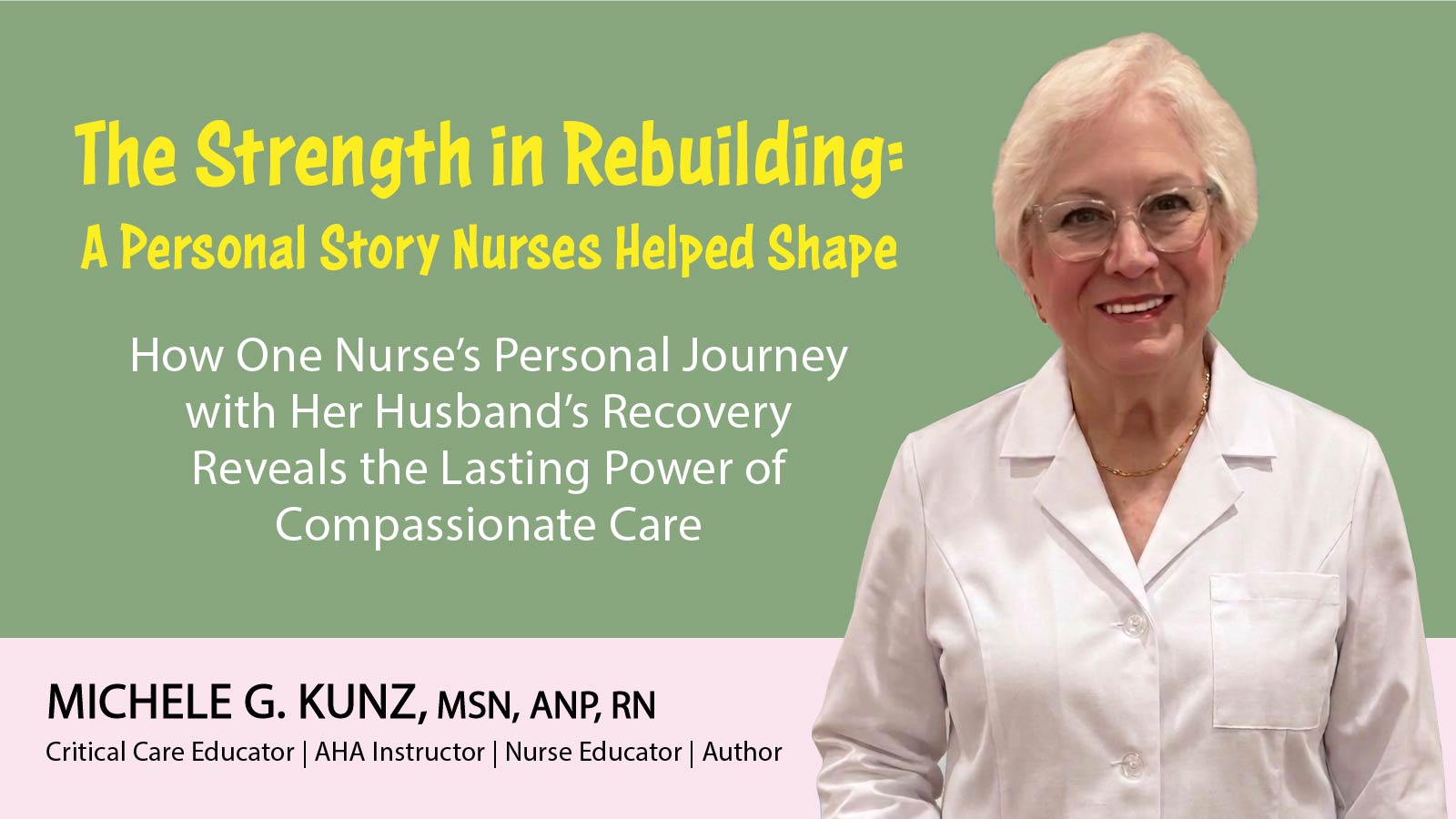
How One Nurse’s Personal Journey with Her Husband’s Recovery Reveals the Lasting Power of Compassionate Care
Synopsis
In this deeply personal reflection, Michele shares how her husband’s unexpected facial paralysis following brain surgery reshaped both their lives—and how the compassion and presence of nurses helped fuel his long and painful recovery. With heartfelt insight, Michele reminds nurses that their care goes far beyond the bedside—it becomes part of the patient’s strength, healing, and story.
Introduciton
In every class I teach, I talk about the importance of presence, compassion, and mindful care. But today, I want to tell you something more personal. It’s a story many of you already know—because you were part of the care, the conversations, and the quiet moments that carried us through. You weren’t just witnesses to our journey; you helped shape it with your presence and compassion.
Many of you also offered guidance, caring words, sympathy, emotional support, and love, and you shared your own stories—each one adding comfort, insight, and perspective to our experience. All of it was a lifeline that helped carry us through. For that—and for each of you—we are deeply thankful.
The Diagnosis and Surgery
My husband, Joseph, underwent brain surgery in December 2023 for a vestibular schwannoma—a benign tumor on the nerve that controls hearing and balance. The surgery, though necessary, left him with complete facial paralysis on one side of his face. When he woke up, he couldn't blink, smile, or speak clearly. For sixteen months after the surgery, he had to wear an eye patch to protect the eye because he couldn’t close it, and apply eye drops throughout the day to keep it from drying out.
He also saw ophthalmologists regularly to monitor the eye and check for complications like a scratched cornea—an all-too-common side effect of facial palsy when the eyelid can't fully close. He also couldn't walk without assistance or without holding on to something—for weeks. And now, seventeen months after surgery, he still cannot drive a car—and still won’t be able to for several more months. His face had changed overnight. And so had our lives.
A Long Road of Rebuilding
A few weeks ago, Joseph underwent the first of two facial reanimation surgeries. These are complex and delicate procedures that involve both eye and facial reconstruction. In this first surgery, surgeons placed a weight inside his left eyelid to help it close and blink more naturally. They also removed a nerve from his left leg and grafted it into the right side of his face, connecting it to nerves on the paralyzed left side in hopes of restoring movement over time. This procedure left him with lasting numbness and a loss of sensation in his left foot, ankle, and part of his leg. He also had the skin next to his eye lifted to help him gain better control of his left eye.
In a few months, Joseph will undergo the second stage of facial reanimation surgery. This next procedure will involve removing a muscle from his right leg and transplanting it into the left side of his face, where it will be connected to the nerve previously grafted. One possible consequence is that he may lose the ability to comfortably cross his legs—a small detail, perhaps, but one more reminder of the cost of healing. After the surgery, physical therapy will begin, and he will start the long process of learning how to smile again. The goal is to restore movement and expression to the left side of his face—another courageous step in a long and complex recovery. It’s yet another layer of physical and emotional challenge added to an already demanding journey.
A Personal Transformation
I share this story not to suggest that our experience was extraordinary. Many of you witness more complex, more heartbreaking cases every day. We know this wasn’t cancer, and we’re deeply grateful for that. But what we’ve lived through—physically, emotionally, and as a family—still changed us. And it reminded us just how much your care matters, no matter the diagnosis.
There is something quietly brutal about seeing the person you love rendered expressionless. His personality didn’t change, his heart didn’t change, but the part of him that lit up every room—that spark in his smile—was suddenly gone. And yet, from the very first moment, he didn’t let grief take the lead. He chose to fight.
Compassion in Action
It was devastating. But it was also the beginning of something powerful.
The nurses and physicians in our community—many of you reading this—not only saw him at his most vulnerable, but also treated him with deep compassion and professionalism. You cared for him not just as a patient, but as a whole person. You gave him dignity in the middle of uncertainty. That kind of presence—clinical and human—was part of the healing, and it mattered more than you may realize.
The Long View of Healing
Now, seventeen months into his recovery and healing process, Joseph's face still bears the effects of the damage. He looks, in his words, like a stroke survivor. Some ask if he had a stroke, some look and are afraid to ask, but you know that is what they are thinking. And that’s not easy to live with—not just because of how he looks, but because of how it feels.
There are the stares, the discomfort, and the quiet, exhausting work of holding on to hope—of believing that healing will come, even when the progress is slow and uncertain—day by day, moment by moment. He has another surgery ahead in a few months, and sometime after that, he’ll undergo Gamma Knife radiation to finally stop the tumor from growing. But despite all of this, what has stood out the most is not what he lost—but what he’s rebuilding.
A Message to Every Nurse
And that’s what I want every nurse to take away from this: You're doing the hard work to rebuild someone’s life. And that work may never get fully recognized. But your presence, the tone of your voice, the steadiness of your hand—these things stay with people. They shape healing in ways that surgery and medication alone never could.
When my husband assists with our classes, the nurses and physicians can see his face up close. Many already know his story. Some ask questions. Some just nod quietly. But he still shows up. He shows up because he knows that healing doesn't mean going back to who you were. It means growing into someone stronger. It means living your truth in the open, not hiding it.
What I hope every nurse in the room understands—something that can’t be found in a textbook—is this:
Your role goes far beyond medications, procedures, or clinical checklists. When you stand beside someone during their hardest moments, you imprint something lasting. You give them a reason to keep going. You might think you're just doing your job—but to the person lying in that hospital bed, you're often the thread holding their courage together.
Your Care Echoes
Your presence may be quiet. Your actions may seem routine. But they matter. They echo.
The care you give lives on in your patients long after they leave your unit. In every brave step they take toward recovery—in every therapy session, every hard day they survive, every smile they work to regain—your influence is still there.
That’s why your care doesn’t disappear after discharge. It becomes part of your patient’s story. It becomes part of their strength.
Thank You for Being a Nurse
So, the next time you care for someone facing uncertainty or trauma, remember this: You're not just treating a symptom. You're helping write the next chapter of their life.
And if you’re facing your own difficult chapter right now, let this remind you:
You're doing the hard work to rebuild—and that's not a weakness in your story.
It's the foundation of your strength.
This is the heart of mindful nursing—not just treating a condition but meeting the human being behind it with presence and compassion.
“Healing isn’t just a medical outcome—it’s a shared act of courage. Every moment of compassion, every quiet kindness, becomes part of the strength our patients carry forward.” —Michele G. Kunz
Ready to Bring Mindfulness into Your Nursing Practice?
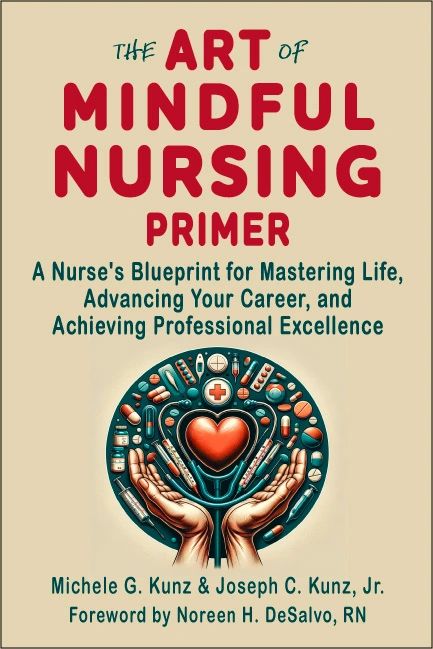
If you want to deepen your understanding of mindfulness and discover practical ways to incorporate it into your daily routine, The Art of Mindful Nursing Primer is the perfect resource.
This book offers insightful strategies, real-world applications, and easy-to-follow techniques designed specifically for nurses. Empower yourself, reduce stress, and enhance the care you provide—one mindful moment at a time.
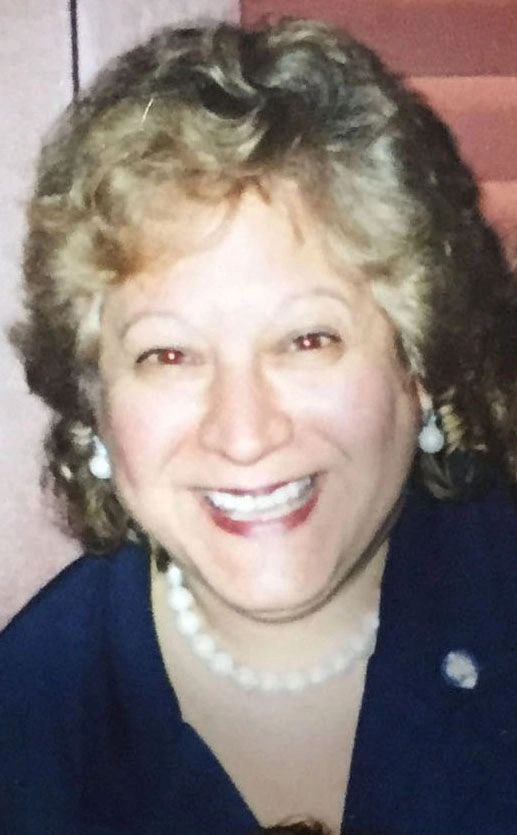
With over 46 years of experience as a nurse and nursing educator, Michele Kunz is a dedicated advocate for compassionate and effective patient care. As a seasoned professional, Michele has trained and certified thousands of nurses and healthcare providers, sharing her extensive knowledge and passion for nursing. Her articles aim to inspire, educate, and support nurses in their journey, promoting excellence in the nursing profession.
