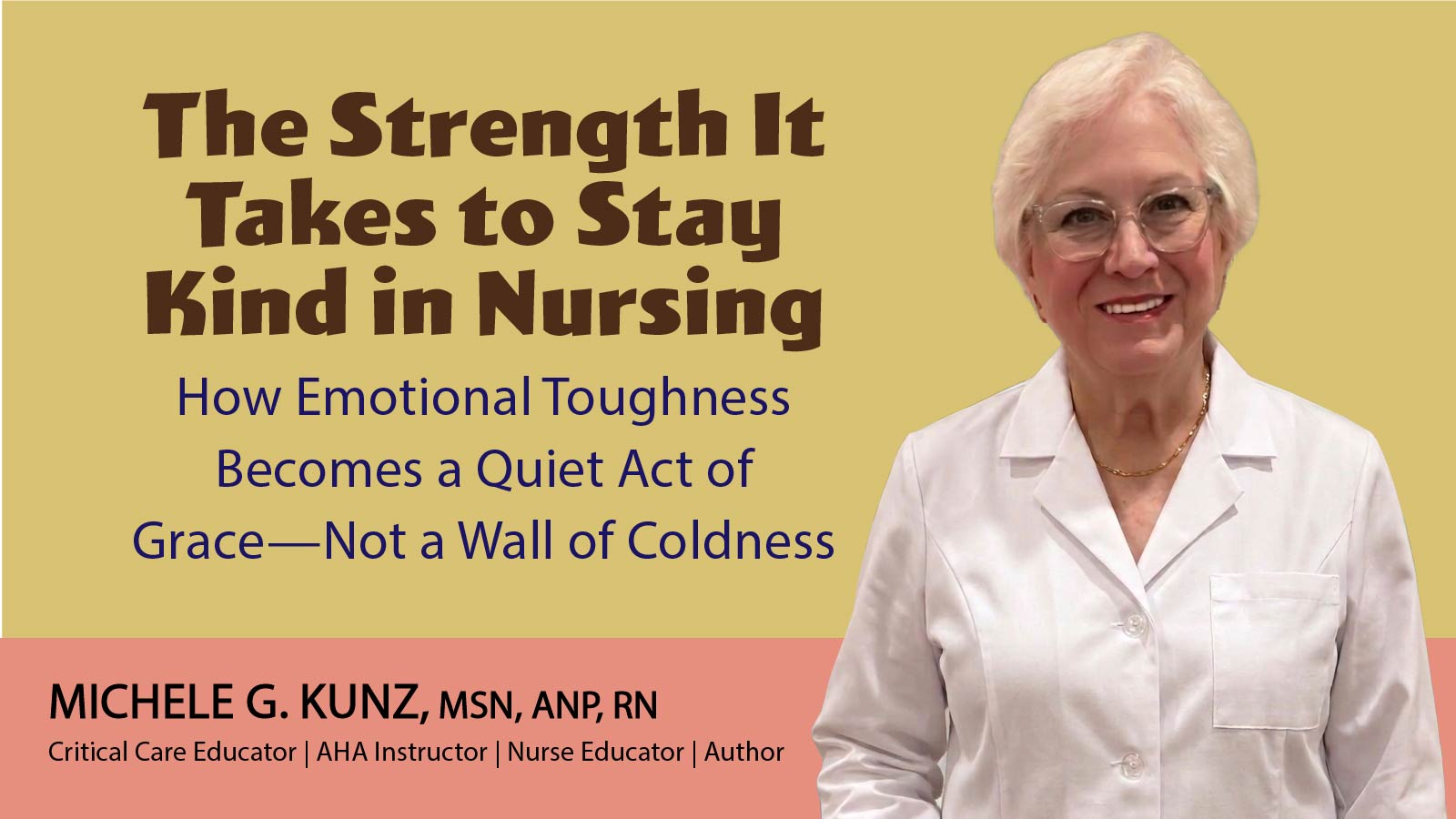
How Emotional Toughness Becomes a Quiet Act of Grace—Not a Wall of Coldness
Synopsis
In the fast-paced, high-stress world of nursing, kindness can sometimes be mistaken for weakness—and emotional toughness confused with emotional coldness. In this reflection, Michele reminds us that the real strength of a nurse is not found in shutting down but in staying open. Drawing from her decades of experience, she explores how mindful awareness helps nurses protect their hearts without losing them, offering a powerful message to anyone trying to stay human in a demanding profession.
“Kindness isn’t something you give away—it’s something you grow stronger from every time you choose it.” — Michele G. Kunz
Introduction
We’ve all heard the advice: “Don’t let it get to you.” And after enough losses, enough chaos, enough ungrateful patients and overwhelmed coworkers, many nurses learn how to shut it off. The kindness. The softness. The feeling.
But here's the truth I’ve learned across a lifetime at the bedside and in the classroom: becoming emotionally cold might protect you for a while—but it will also rob you of the very thing that called you to nursing in the first place.
I. Emotional Toughness Is Not Emotional Numbness
A. The Misunderstanding of Strength
1. Somewhere along the way, nurses are taught—directly or indirectly—that staying “strong” means keeping a straight face, pushing through, and not letting emotions get in the way.
2. But real emotional toughness isn’t about being unaffected. It’s about being deeply affected—and still choosing to show up anyway.
3. Strength is the nurse who stays grounded, not detached.
4. Strength is crying in the break room, wiping your face, and going back in with compassion still intact.
B. Emotional Coldness Comes at a Cost
1. Nurses who go numb often think they’re protecting themselves.
2. But the cost is high: compassion fatigue, burnout, bitterness—and eventually, disconnection from patients, peers, and even from your own sense of purpose.
3. Emotional distance might get you through the week, but it can hollow out your entire career.
4. Coldness doesn’t protect your heart—it puts it in a cage where even you can’t reach it anymore.
II. The Strength of Staying Kind
A. Kindness Requires Resilience
1. Staying kind in this field is not soft—it’s solid.
2. It takes work to be kind to the patient who’s lashing out in pain, or to the family member whose fear is coming out sideways.
3. Kindness isn’t a default setting—it’s a choice you make again and again, even on the hardest days.
4. The nurse who maintains compassion in the middle of chaos is the one who truly leads with strength.
B. The Power of Choosing Grace
1. Grace isn’t passive—it’s active. It’s a deliberate choice to stay rooted in your values.
2. Even when everything around you is unraveling, choosing to respond with care is one of the quietest and most powerful acts of leadership in nursing.
4. Choosing grace protects you from becoming cynical and helps you preserve your purpose.ood—even when you’re tired.
4 Choosing grace protects you from becoming cynical and helps you preserve your purpose.
III. Mindfulness: Your Anchor in the Storm
A. Knowing What You Feel
1. Mindfulness helps you stay aware of what’s happening inside you—not to judge it, but to acknowledge it.
2. When you recognize that you’re overwhelmed or shutting down, you can pause, breathe, and re-center.
3. Naming your feelings is the first step toward managing them.
4. Mindfulness gives you the space to respond, not react.
B. Protecting Your Heart Without Closing It
1. Mindfulness doesn’t mean you absorb everyone’s pain.
2. It means you hold space for your own emotions while still making space for others—without drowning in either.
3. It helps you set boundaries from a place of peace, not guilt.
4. Mindful presence is the difference between carrying the weight of the world and simply holding your place in it.
IV. What This Looks Like in Real Life
Let me tell you what strength really looks like: • It’s the nurse who tears up after a patient passes—but still goes to comfort the family.
- It’s the nurse who doesn’t lash out when a colleague is short—but instead checks in to see if they’re okay.
- It’s the nurse who remembers that every human being on their floor is scared, tired, or hurting—even if they don’t show it.
- It’s the nurse who ends a 12-hour shift, heart aching, and still manages a smile for the next nurse walking in.
- It’s the nurse who holds the hand of a patient with no visitors—knowing that simple act might be the most important thing they do all day.
Strength is kindness that refuses to die.
Conclusion: A Better Kind of Strong
You don’t need to be hard to be strong. You don’t need to shut down to survive. You can stay open. You can stay kind. And you can do all of this without letting the job destroy your spirit.
That’s the kind of strength that lasts. That’s mindful nursing. And that’s the kind of nurse the world needs more of—now more than ever.
Reflection Prompt
What does emotional strength look like to you in your nursing role? When was the last time you felt tempted to shut down emotionally, and how did you respond? Take five quiet minutes to reflect—or write it down.
End-of-Day Mindfulness Practice
- Close your eyes.
- Take three slow breaths.
- Think of one moment from today—big or small—where you showed kindness.
- Feel it. Let it land.
- That was strength. That was you.
“You don’t need to become cold to survive this profession. You need to become deeply, quietly strong—and still human.” — Michele G. Kunz
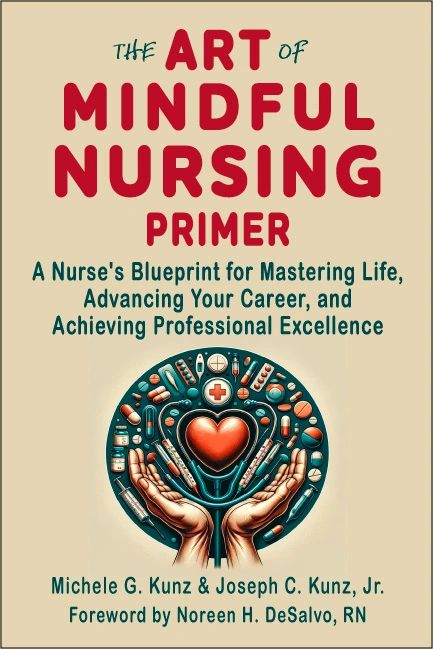
Want to Go Deeper into the Heart of Nursing?
If today’s reflection spoke to you, you’ll love The Art of Mindful Nursing Primer. This short, powerful guide is filled with real-world wisdom and mindful strategies to help you stay grounded, compassionate, and strong—no matter what your shift brings.
Because being a great nurse starts with taking care of the one wearing the scrubs.
