ACLS Terminology
Zombie Notes Study Charts®
A Test Prep Guide for Healthcare Professionals and Students
The fast & painless way to devour your studies!
A quick glossary for the rhythms, medications, procedures, abbreviations, and emergency-care terms that make ACLS feel like a new language.
Before ACLS algorithms become familiar, the vocabulary can be a barrier of its own. Antiarrhythmics, rhythm names, pacing, capnography, PCI, PEA, STEMI, synchronized cardioversion, reversible causes, and common resuscitation abbreviations appear throughout lectures, manuals, scenarios, and exam-preparation material. Zombie Notes ACLS Terminology collects many of those terms into a two-page alphabetical reference for quick lookup and repeated review.
About This Study Chart
The chart includes medication terms such as amiodarone, atropine, dopamine, epinephrine, norepinephrine, vasopressin, beta blockers, and calcium channel blockers; rhythm and conduction terms such as atrial fibrillation, atrial flutter, ventricular fibrillation, ventricular tachycardia, heart block, and junctional rhythm; and procedural or monitoring concepts such as capnography, intraosseous infusion, PCI, pacing, synchronized cardioversion, and pulse oximetry.
It also defines common ACLS shorthand and associated emergency concepts, including MONA, MOVIE, PEA, STEMI, tension pneumothorax, hypovolemia, hypoxia, potassium abnormalities, and more. The glossary format makes the chart useful when a learner needs a fast definition while working through a larger ACLS lesson.
What You’ll Find Inside
- ACLS medications: Concise definitions of commonly encountered antiarrhythmic, chronotropic, vasoactive, and cardiovascular medication terms.
- Rhythms and conduction: Atrial, ventricular, junctional, and heart-block terminology appears throughout the chart for rapid vocabulary review.
- Defibrillation and pacing language: Joules, synchronized cardioversion, transcutaneous pacing, transvenous pacing, and related electrical-therapy terms are included.
- Airway, ventilation, and monitoring: Endotracheal tubes, LMA, capnography, oxygen saturation, and infusion/access terminology support broader resuscitation study.
- ACS and stroke-related terms: PCI, STEMI, stroke-scale language, and related cardiovascular concepts extend the glossary beyond arrest algorithms.
- Abbreviations and mnemonics: The chart collects short forms and memory aids that students often meet without much explanation in longer course materials.
Who It Helps
- First-time ACLS students learning the vocabulary behind the algorithms.
- Nursing and allied-health students who need quick definitions while studying cardiovascular emergencies.
- Clinicians returning for ACLS renewal after time away from the terminology.
- Learners who want a compact glossary to keep beside an ACLS provider manual, workbook, or question bank.
How Zombie Notes Work
Use the chart when a term interrupts your understanding of a larger ACLS concept. Look it up, state the definition in your own words, and then return to the algorithm or scenario. Later, use the chart in reverse by covering definitions and testing whether you can explain each term without help.
The terminology chart is most useful when paired with a broader ACLS resource. Vocabulary tells you what the words mean; the ACLS Certification Exam Prep chart, workbook, and Q&A materials help place those words into sequences, decisions, and clinical reasoning.
Update and Reference Note
Some terminology remains foundational, but resuscitation recommendations, medication usage, devices, and preferred language change over time. The chart should receive a current clinical review before the website describes it as aligned with the latest ACLS guidance.
About the Authors
Michele G. Kunz, MSN, ANP, RN, is a nurse practitioner, healthcare educator, and author whose teaching focuses on making complex clinical material easier to organize, review, and remember. Her Zombie Notes Study Charts use concise explanations, visual structure, and repeated high-yield relationships to support students, nurses, and other healthcare professionals as they study certification and clinical-review material.
Joseph C. Kunz, Jr., is a writer, publisher, and co-creator of the Zombie Notes Study Charts. Through The Mindful Nurse Press, he works alongside Michele to turn complex clinical material into clear, well-organized study tools, handling the design, production, and publishing that bring each chart to healthcare students and professionals.
Product Details
- Title: ACLS Terminology
- Series: Zombie Notes Study Charts
- Subtitle: A Test Prep Guide for Healthcare Professionals and Students
- Authors: Michele G. Kunz, MSN, ANP, RN
- Publisher: Dickson Keanaghan, LLC
- Imprint: The Mindful Nurse Press
- Publication Date: 2026
- Format: Ebook / Digital Study Guide
- Print Edition: None — Ebook Only
- Ebook ISBN: 979-8-90706-015-9
- Language: English
Educational Note
This independent study chart is an educational and supplemental review resource. It is not an official American Heart Association product and does not replace required provider manuals, course materials, hands-on skills training, instructor guidance, institutional policy, local protocols, medical direction, or clinical judgment. Medication, device, resuscitation, and treatment information should always be checked against current authoritative sources and applicable local requirements.
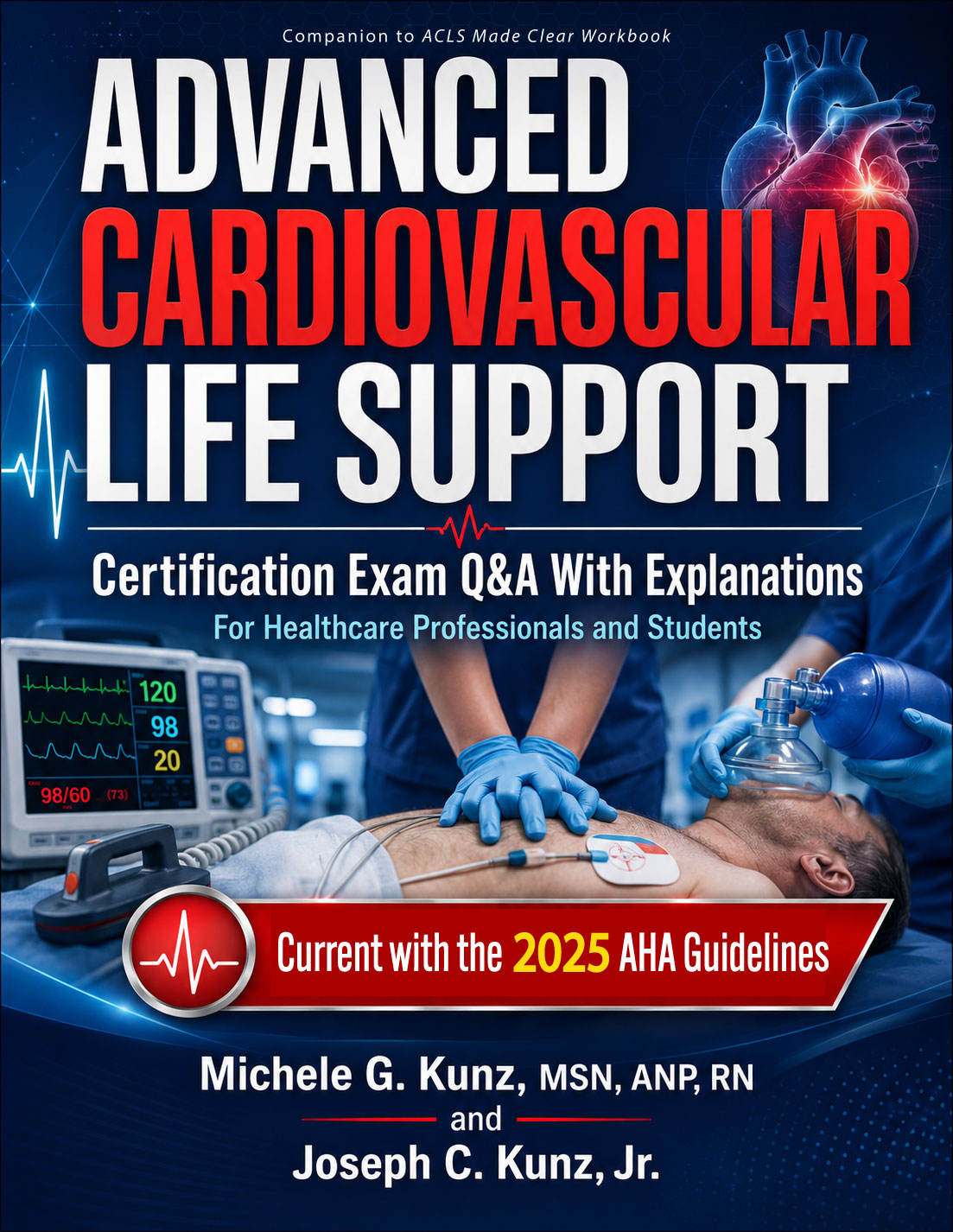
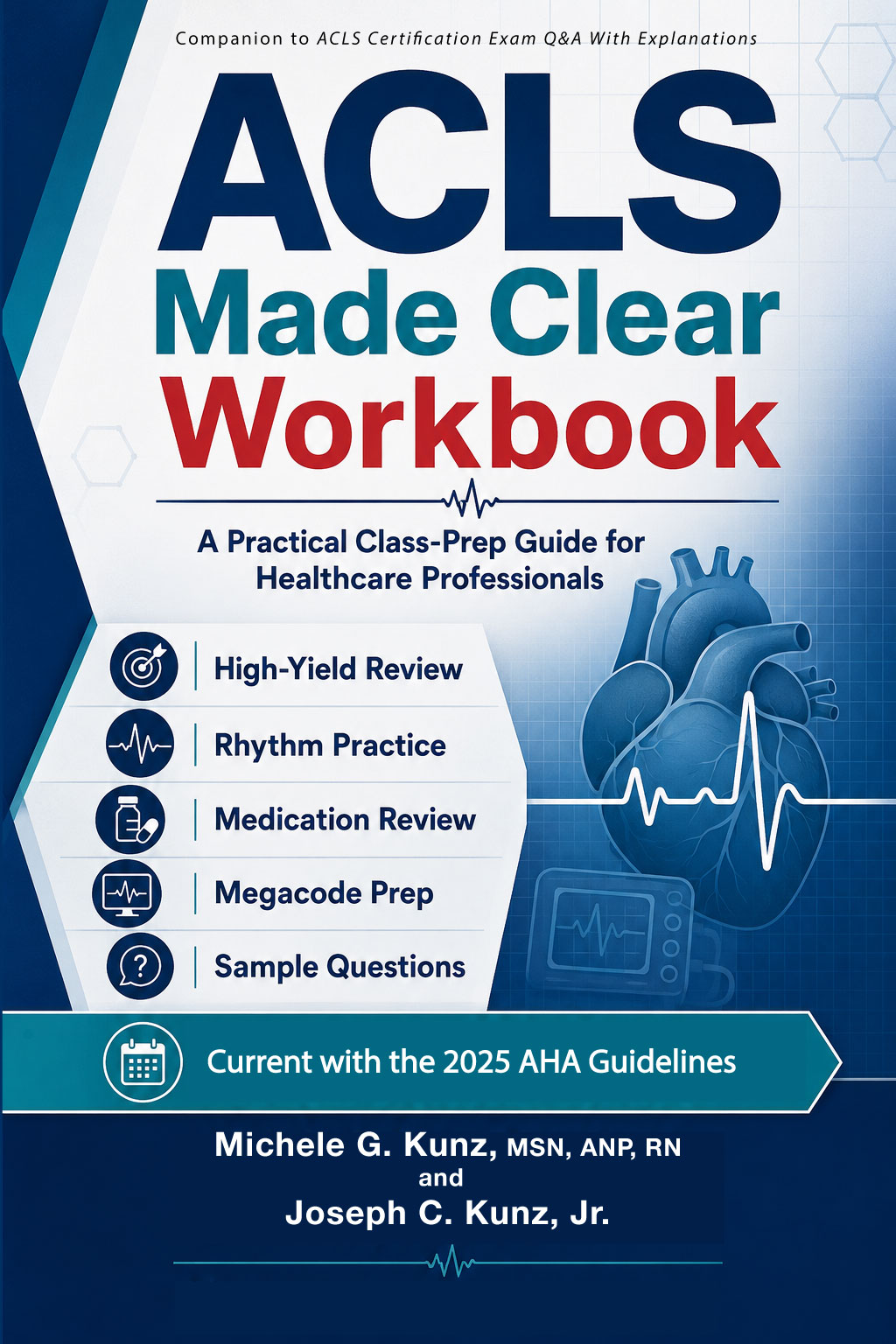
Complete Your ACLS Certification Prep
Three resources that work together — a full exam Q&A guide, a class-prep workbook, and quick-study Zombie Notes.