101 Pharmacology Word-Search Puzzles
For Nurses, Nursing Students, and Healthcare Professionals
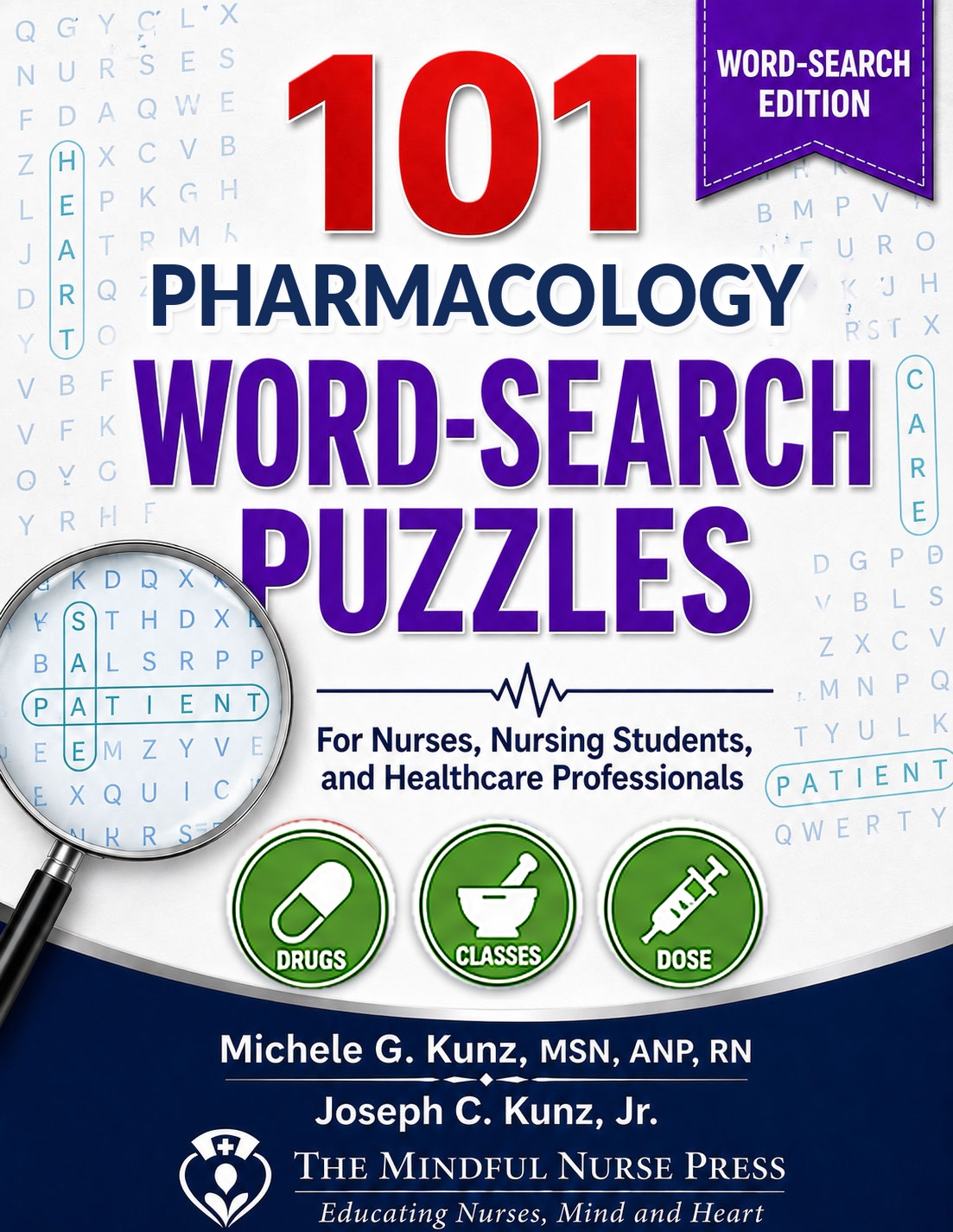
Find the Language of Pharmacology—One Puzzle at a Time
Pharmacology has a language of its own: medication names, drug classes, receptors, mechanisms, routes, adverse effects, interactions, safety concepts, pharmacokinetic terms, and hundreds of technical words that healthcare learners eventually need to recognize.
This book gives you a more relaxed way to spend time with that vocabulary through 101 topic-focused word searches arranged in a complete pharmacology progression.
About This Book
The book follows the same fifteen-part architecture as the Pharmacology Crossword edition. It starts with foundational pharmacology terminology, pharmacokinetics, pharmacodynamics, medication administration, and safety. It then moves systematically through the autonomic nervous system and the major therapeutic drug families used throughout healthcare.
Each puzzle supplies a list of terms to locate. Words may appear across, down, diagonally, forward, or backward. Because the terminology is visible, the primary task is recognition: seeing the word, noticing its spelling and pattern, and encountering it again within a defined pharmacology topic.
What You’ll Find Inside
- Foundations of Pharmacology: What pharmacology is; generic, brand, and chemical names; classifications; drug development; prescriptions and medication orders; drug references; abbreviations and symbols.
- Pharmacokinetics and Pharmacodynamics: Absorption, distribution, metabolism, excretion, half-life, onset, peak, duration, receptors, agonists, antagonists, therapeutic index, and dose-response relationships.
- Medication Administration and Safety: Rights of medication administration, routes, enteral/parenteral/topical/transdermal medications, dosage calculations, medication errors, high-alert drugs, adverse effects, allergies, and interactions.
- Autonomic, Cardiovascular, and Respiratory Drugs: Cholinergic, anticholinergic, adrenergic and blocking drugs; antihypertensives, diuretics, ACE inhibitors/ARBs, calcium channel blockers, beta blockers, nitrates, antiarrhythmics, heart-failure drugs, anticoagulants, thrombolytics, lipid-lowering drugs, bronchodilators, corticosteroids, antihistamines, decongestants, and asthma/COPD drugs.
- CNS, Pain, Anesthesia, and Anti-Inflammatory Drugs: Sedatives, anxiolytics, antidepressants, antipsychotics, mood stabilizers, Parkinson and seizure drugs, stimulants, Alzheimer drugs, opioids, opioid antagonists, NSAIDs, acetaminophen, migraine drugs, anesthetics, and gout/arthritis drugs.
- Anti-Infective and Endocrine Drugs: Antimicrobial principles; major antibiotic families; antitubercular, antifungal, antiviral, and antiretroviral drugs; insulin, oral antidiabetics, thyroid drugs, corticosteroids, pituitary/hypothalamic drugs, reproductive hormones, and bone/calcium drugs.
- GI, Renal, Immune, Blood, Oncology, and Special-Use Drugs: Acid-reducing drugs, antiemetics, bowel medications, IBD drugs, digestive enzymes, fluids and electrolytes, bladder and acid-base drugs, vaccines, immunosuppressants, anemia drugs, chemotherapy, biologics, antirheumatic drugs, vitamins, supplements, dermatologic, ophthalmic, otic, herbal, and complementary products.
- Comprehensive Challenge: Puzzle 101 draws material from across the entire book into one final pharmacology review.
- Complete solved-grid answer key: Check the location of every hidden term after finishing each puzzle.
- Full-size 8.5 × 11-inch format: The book is designed for comfortable, screen-free puzzle solving and vocabulary review.
Who This Book Is For
- Nursing students who want another way to reinforce medication names, drug classes, mechanisms, routes, adverse effects, and safety terminology.
- Pharmacology students looking for repeated exposure to vocabulary appearing throughout their coursework.
- Nurses and healthcare professionals who want a relaxed, structured pharmacology refresher.
- Healthcare students who want medication terminology to become more recognizable and less intimidating.
- Healthcare educators looking for topic-specific supplemental activities.
- People who enjoy word searches and want to combine that activity with meaningful healthcare subject matter.
How This Book Works
The answer is already in front of you. That is what distinguishes a word search from the other two formats. You see the term first, then recognize its spelling and visual pattern inside a field of letters.
Finding a medication name does not mean you understand everything about that medication, and the book does not make that claim. Instead, use unfamiliar terms as study signals. If you can locate a word but cannot explain what it means, what class it belongs to, or why it matters, return to your pharmacology materials and investigate it further.
Recognizing Patterns in Pharmacology
Pharmacology becomes less intimidating when patterns begin to emerge. Related medications appear together. Familiar name elements recur. Drug classes and pharmacologic terms that once looked foreign begin to stand out.
The purpose is not to teach medication use from spelling alone. It is to build familiarity with the language surrounding pharmacology so deeper learning through lectures, textbooks, clinical instruction, drug references, practice questions, and medication-administration training has a more recognizable vocabulary to work with.
About the Authors
Michele G. Kunz, MSN, ANP, RN
Michele G. Kunz is a nurse practitioner, longtime nursing educator, author, and healthcare instructor whose work focuses on making complex clinical material easier to organize, review, and remember. Through The Mindful Nurse Press, she develops practical educational resources for nurses, nursing students, and other healthcare professionals.
Joseph C. Kunz, Jr.
Joseph C. Kunz, Jr. is an author and publisher who has been developing educational materials and study guides for students and professionals since 1985. He works with Michele to organize complex healthcare subjects into clear, practical learning resources presented through multiple study formats.
Educational Note
101 Pharmacology Word-Search Puzzles is intended for educational, recreational, and general review purposes. It is not a clinical drug reference, prescribing guide, or source of medical advice and does not replace formal instruction, clinical training, current medication references, manufacturer prescribing information, institutional policies, professional judgment, or applicable clinical guidelines.
Medication information changes. New drugs, indications, warnings, contraindications, interactions, formulations, and recommendations may appear after publication. Healthcare professionals and students should consult current authoritative sources when making medication-related clinical or educational decisions.
Book Details
- Title: 101 Pharmacology Word-Search Puzzles
- Authors: Michele G. Kunz, MSN, ANP, RN & Joseph C. Kunz, Jr.
- Publisher: Dickson Keanaghan, LLC
- Imprint: The Mindful Nurse Press
- Publication Date: September 2026
- Edition: First Paperback Edition
- Format: Paperback
- Page Count: 134 pages
- Trim Size: 8.5 × 11 inches
- ISBN: 978-1-933230-95-5
- Language: English
The Complete Pharmacology Puzzle Series
Study the same subject three different ways—through clue-based retrieval, terminology recognition, and guided recall in context.
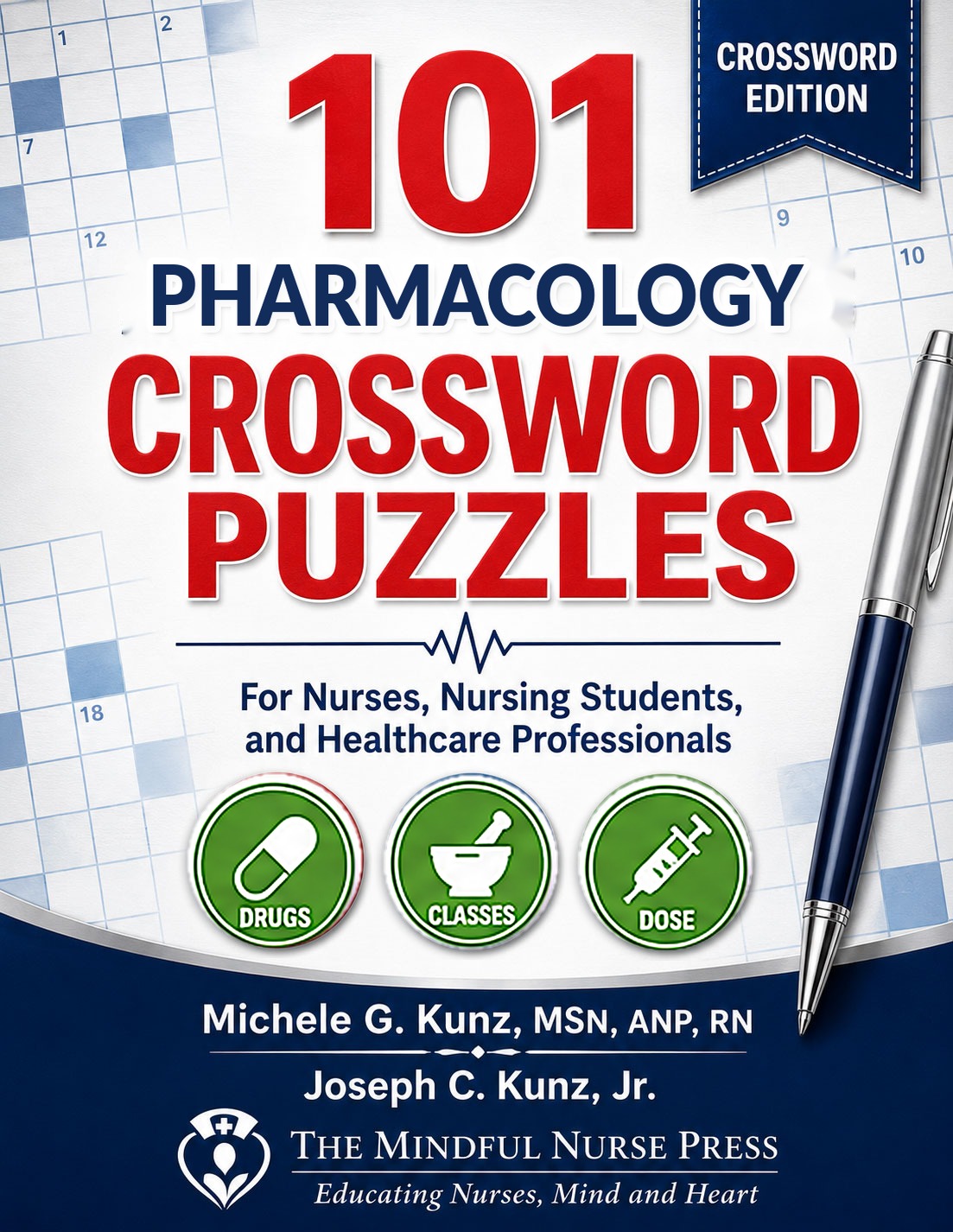
101 Pharmacology Crossword Puzzles
101 Pharmacology Word-Search Puzzles
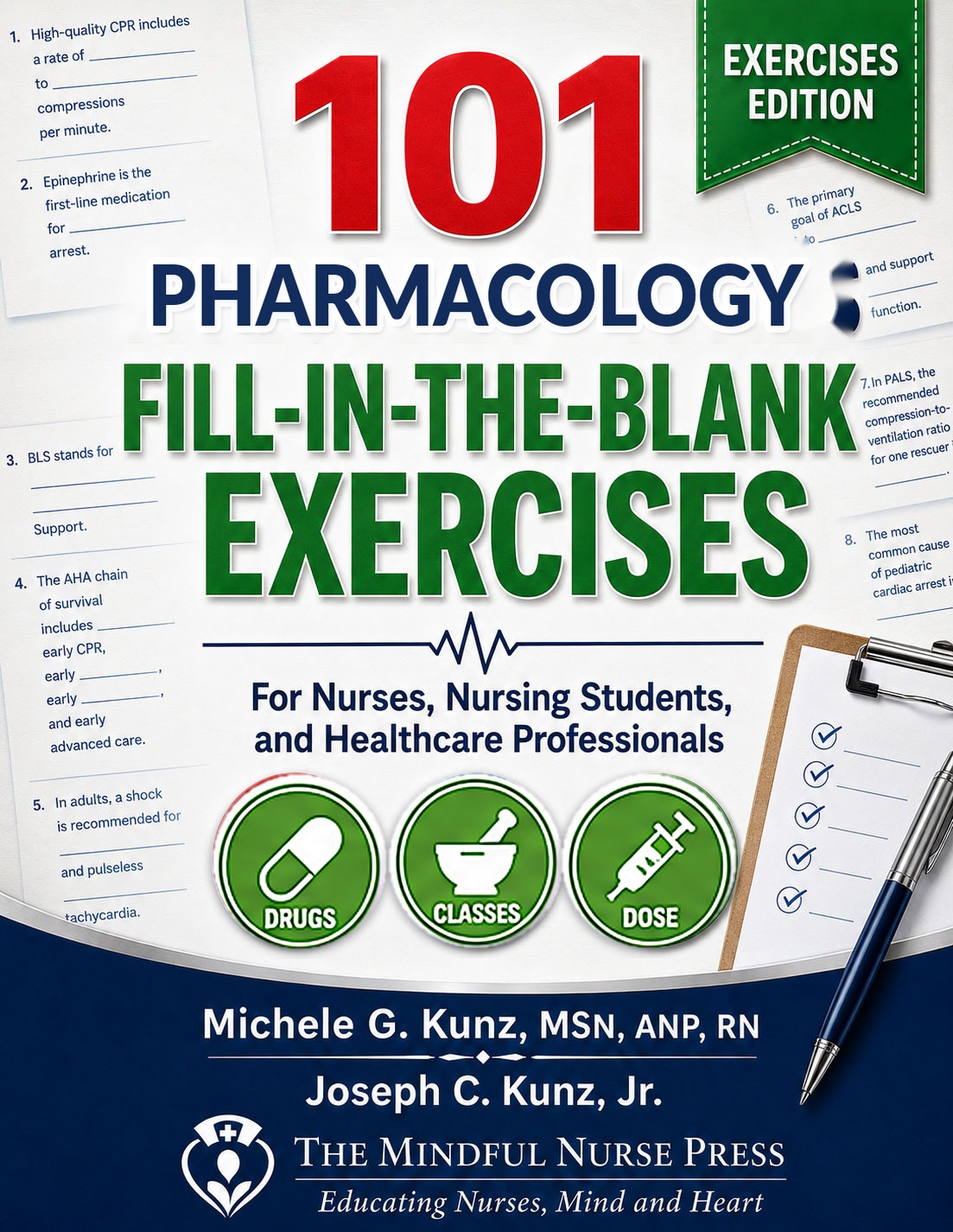
101 Pharmacology Fill-in-the-Blank Exercises
Three formats. Three different mental tasks. One matched Pharmacology study series.